
Artificial intelligence has ceased to be a futuristic buzzword and has become an accessible tool that can make a real difference to your online store's performance. As an e-commerce manager, you don't need to understand complex algorithms to reap the benefits of AI. You just need to understand the problems it solves and the opportunities it opens up for your business, even if you don't have a dedicated IT team.

AI in e-commerce: A short guide for the manager (no technical jargon)
Real benefits of AI in e-commerce: More than just chatbots
Intelligent offer personalization: How does AI match products to customers?
Dynamic product recommendations that add real value to the shopping cart
A search engine that understands the customer: The role of AI in store navigation
Automating pricing and promotions: How does AI optimize margins in real time?
Generate product descriptions and marketing content with the help of AI
Customer segmentation and churn prediction: Before the customer leaves
Demand forecasting and inventory optimization through predictive analytics
Implementing AI in e-commerce step by step: Where to start without an IT team?
An overview of AI tools for e-commerce that won't ruin your budget
How to measure the return on investment (ROI) of artificial intelligence-based projects?
The most common pitfalls when implementing e-commerce innovation: How to avoid them?
The future of online commerce: What innovations in e-commerce will AI bring?
AI in e-commerce: Frequently Asked Questions (FAQ)
AI in e-commerce: A short guide for the manager (no technical jargon)
Artificial intelligence in e-commerce is all about automating intelligent decisions at scale. It's the ability to analyze the behavior of thousands of customers in real time and tailor offers to each of them individually. For your business, this means being able to compete with the bigger players without having to hire an army of analysts and developers. The AI tools available today are often SaaS (Software as a Service) solutions or plug-ins for popular platforms, making their implementation a matter of a few clicks and configuration. To ignore this potential is to leave money on the table that your competitors are eager to develop. It's an opportunity to increase efficiency, reduce costs and, most importantly, build a better shopping experience for your customers.
What specific e-commerce problems can artificial intelligence solve?
Artificial intelligence addresses the most pressing problems that e-commerce managers face every day. First of all, it helps fight low conversion rates by automatically personalizing offers and product recommendations, making it faster for customers to find what they are looking for. It solves the problem of abandoned shopping carts by identifying moments of hesitation and responding to them with personalized communication. AI tackles inefficient customer service by deploying intelligent chatbots that answer repetitive questions 24/7, easing the burden on your team. It also helps optimize inventory by forecasting demand, preventing you from freezing capital in goods that don't sell. It's also a way to create engaging product descriptions on a massive scale, which saves time and improves SEO.
7 AI applications in e-commerce that you can implement right away: an overview of the possibilities.
You don't need a revolution to start using AI. You can start by implementing one or two solutions that will bring the fastest return on investment. The first area is intelligent personalization of the offer, which matches the homepage and recommendations to user behavior. The second is dynamic product recommendations, increasing the average order value. The third is AI-based search engine that understands customer intent, not just keywords. The fourth is real-time automation of pricing and promotions. The fifth, marketing content generation, from product descriptions to social media posts. The sixth is advanced customer segmentation and predicting customer churn. The seventh, demand forecasting to optimize logistics. Each of these applications is available as off-the-shelf tools.
Real benefits of AI in e-commerce: More than just chatbots
While intelligent chatbots are the most recognizable example of AI, the true value of this technology lies much deeper. Artificial intelligence is the mechanism that drives revenue growth, optimizes margins and builds competitive advantage. Focusing solely on customer service automation is like buying a smartphone only to use it as a calculator, ignoring its full potential.
AI-based personalization of product recommendations: How to increase sales by offering customers exactly what they need?
AI-based recommendation systems analyze in real time browsing history, previous purchases, and even products added to the shopping cart to suggest to the customer the next items most likely to interest them. Unlike static "others have also bought" boxes, AI algorithms create a unique set of suggestions for each user. This translates directly into an increase in the average online shopping cart (AOV) and conversion rate. The customer feels that the store understands him and prompts him with pertinent solutions, which builds his loyalty and encourages him to return more often. Implementing such a system, thanks to ready-made plug-ins, is now easier than ever and requires no programming knowledge.
Dynamic pricing using AI: Optimize pricing strategy in real time to maximize profit.
Manually managing pricing in a store with hundreds or thousands of products is inefficient and often leads to lost margins. AI tools for dynamic pricing automate this process. They analyze historical sales data, competitor prices, inventory levels and even the time of day or weather to adjust the product price in real time. The goal is not always the lowest price, but the optimal price that maximizes the likelihood of sales at the highest possible margin. This allows you to automatically react to market movements, organize instant promotions for products with low demand, or raise prices on bestsellers when competitors run out of stock. It's a powerful tool for managing profitability.
Automating customer service: Using AI to answer questions, solve problems, and personalize support.
Modern AI chatbots are much more than simple automatons with pre-programmed answers. Using natural language processing (NLP), they can understand a customer's intentions asked in colloquial language and give a precise answer. They can check the status of an order, inform about product availability or help with the return process. What's more, when integrated with a CRM system, they can personalize communication, addressing the customer by name and based on their purchase history. Implementing such an assistant significantly eases the burden on your team, allowing them to focus on more complex problems, while providing customers with immediate 24/7 support.
Intelligent offer personalization: How does AI match products to customers?
Imagine every customer entering your store seeing a different, perfectly customized site. This is what AI-based intelligent personalization makes possible. By analyzing real-time data, these systems dynamically change the layout of the site, the products displayed and marketing messages to maximize the chance of conversion. This is a shift away from a one-size-fits-all approach to one-to-one marketing.
How does AI analyze customer data to understand their buying preferences?
Artificial intelligence algorithms act as a tireless analyst that watches every user in your store. They track hundreds of behavioral signals, such as products clicked on, time spent on a particular page, categories browsed, goods added to the shopping cart, or history of previous purchases. AI not only records this data, but also looks for patterns and correlations in it. For example, it may discover that customers who buy product A often come back for product B after a week. Based on these patterns, it builds a dynamic profile of each customer, predicting their future needs and intentions. In this way, personalization is not based on guesswork, but on hard data about actual behavior.
1:1 personalization vs. customer segmentation - what are the differences and when to use?
Traditional segmentation involves grouping customers according to common characteristics, such as demographic (age, gender) or behavioral (customers who spent more than PLN 500). The same message is directed to the entire group. 1:1 personalization, driven by AI, goes a step further. It treats each customer as a separate segment. This means that two people with the same demographics but different browsing histories will see completely different recommendations and banners. Segmentation is still useful for planning general marketing campaigns. 1:1 personalization, on the other hand, works perfectly on a store page, where interaction takes place in real time and every second of a customer's attention counts. This is the highest level of offer customization.
Examples of smart offer personalization in practice: product recommendations, personalized mailings, dynamic banners.
Smart personalization manifests itself in many places. The most obvious example is personalized product recommendations on the homepage and product card, which change depending on what the user is currently viewing. Another example is dynamic banners that can promote a different product category depending on the customer's interests. In email marketing, AI allows you to send messages with dynamically inserted products that are based on a user's recent activity in the store, rather than a static offer. Even in-store search results can be personalized, where products that more closely match a customer's profile are displayed at higher positions.
Dynamic product recommendations that add real value to the shopping cart
Recommendation engines are one of the most effective AI tools in an e-commerce manager's arsenal. Their goal is not only to make it easier for the customer to navigate, but most importantly to actively increase the value of their order through intelligent cross-selling and up-selling. This is a simple way to increase your store's key financial indicators.
How do dynamic product recommendations work and why are they better than static ones?
Static recommendations, such as "Bestsellers" or "News", are the same for all users. Dynamic recommendations driven by AI are unique for each customer and each session. Algorithms analyze user behavior in real time and select products based on that. If a customer is looking at a camera, the system can recommend a matching lens (cross-selling) or a newer, better camera model (up-selling). They use various models, such as collaborative filtering ("customers like you also bought...") or content-based analysis (recommending products with similar attributes). This adaptability makes them much more relevant and effective in generating additional sales.
Examples of dynamic recommendations in action: "Customers who bought this product also bought..." and other strategies.
The most common strategy is to display complementary products on the product card or in the shopping cart, such as "Buy a case and protective glass for this." Another approach is "You might also like it," where AI suggests alternative products if the customer hesitates to make a decision. In the shopping cart, just before the purchase is finalized, the strategy "Add another product for X zloty to get free delivery" can be used, where AI suggests the most relevant products at the right price. Recommendations can also be used in post-sale communication, such as in a thank-you email for a purchase, suggesting products that will complement the last order. Each of these strategies aims to maximize the customer's lifetime value (LTV).
Measuring the effectiveness of dynamic recommendations: How to track basket value growth and conversions?
The effectiveness of recommendation systems can and should be measured. A key indicator is the increase in average order value (AOV). Compare the AOV from before the tool was implemented with the AOV after the tool went live. Many AI tools offer built-in analytics dashboards that show what percentage of revenue was generated directly from clicks on recommended products. It is also possible to track the click-through rate (CTR) for recommendation boxes and the conversion rate of sessions in which interactions with recommendations occurred. A/B testing, which involves showing recommendations to only a subset of users, is the best way to determine precisely how much sales growth it generates.
A search engine that understands the customer: The role of AI in store navigation
An internal search engine is one of the most important tools in your store. Customers who use it tend to have a much higher purchase intention. If a search engine doesn't return relevant results, you lose almost certain sales. AI is revolutionizing the operation of in-store search engines, transforming them from simple text-matching tools into intelligent shopping assistants.
How is AI revolutionizing e-commerce search and why are traditional methods failing?
Traditional search engines work on the principle of keyword matching. If a customer types in "red dress for wedding" and the word "wedding" is not in the product name, that product may not be displayed, even if it is a perfect match. AI-based search engines use natural language processing (NLP) and machine learning to understand the *intent* of a query, not just the content. They can handle synonyms ("sneakers" vs. "athletic shoes"), typos, and can even interpret complex queries. What's more, they learn from user behavior. If many customers click on product Y after typing in phrase X, the system will start promoting that product in the results for phrase X. This makes the results dynamically optimized for conversions.
Personalized search results: How does AI customize offers?
Artificial intelligence even allows personalization of the order in which search results are displayed. Knowing a given customer's shopping and browsing history, the system can promote products from brands that that customer prefers, or products in the price category in which he or she most frequently purchases, to higher positions. For example, if two customers type the same phrase "TV," one who has historically bought premium electronics will see the latest OLED models at the top of the list, while the other, looking for budget solutions, will see the best-priced models first. This personalization of the ranking significantly shortens the purchase path and increases customer satisfaction, as they find exactly what they are looking for faster.
Visual Search: How does AI allow you to find products based on photos and images?
Visual search is one of the most exciting innovations in e-commerce. With image recognition technology, a customer can upload a photo of a product they saw on the street or in a warehouse, for example, and the AI search engine will find identical or visually similar items in your store. This is particularly useful in the fashion, furniture or decorative industries, where customers often don't know the name or brand of the product, but have a picture of it. Implementing this feature eliminates the barrier of having to describe the product in words and opens up a whole new, intuitive channel to reach your offer. This is a powerful tool that can set your store apart from the competition and significantly improve the user experience.
Automating pricing and promotions: How does AI optimize margins in real time?
Managing pricing strategy is one of the biggest challenges in e-commerce. Pricing too high drives customers away, while pricing too low destroys margins. AI offers a solution to this dilemma by automating and optimizing pricing decisions based on massive amounts of data, maximizing profit in a rapidly changing market environment.
How does AI analyze data and market trends to automatically determine optimal product pricing?
AI-based dynamic pricing systems are advanced analytical engines. They take data from multiple sources simultaneously: internal (sales history, inventory levels, product margins) and external (competitor prices, general demand trends, and even weather or event data). A machine learning algorithm processes this information, looking for correlations and building predictive models. Based on this, it is able to determine the price that, at any given time, gives the highest probability of selling at the maximum margin. This process is fully automatic and can involve thousands of products at once, responding to market changes in minutes rather than days.
Personalizing promotions: How does AI segment customers and tailor promotions to their individual preferences?
Instead of offering the same discount to all customers, AI allows the creation of personalized promotions. The system can identify a segment of price-sensitive customers and it is to them that it can offer a discount code to encourage them to buy. In turn, loyal customers who regularly buy without discounts can be offered free delivery or a small freebie so as not to spoil their buying habits with high discounts. AI can also identify customers at risk of leaving (churn) and target them with special "win-back" offers to keep them. This precise distribution of promotions not only makes them more effective, but also protects your margins, as discounts only go where they are really needed to close the sale.
How do you avoid the pitfalls of "price wars" and remain profitable when automating prices using AI?
The goal of AI in pricing is not to blindly lower prices to be the cheapest in the market. That's a straight path to destroying profitability. Intelligent systems allow you to define business rules, such as a minimum acceptable margin below which the price will never fall. Algorithms often use a "value-based pricing" strategy, looking for moments when the price can be raised, such as when a competitor is out of stock or when demand for a product is soaring. The key is to monitor not just your competitors' prices, but the entire spectrum of market data. In this way, AI doesn't drag you into a price war, but becomes a tool for strategic price positioning that balances competitiveness and profitability.
Generate product descriptions and marketing content with the help of AI
Creating unique and engaging content at scale is time-consuming and expensive. Generative artificial intelligence (AI), based on large-scale language models (LLMs), is revolutionizing the process, enabling the rapid creation of high-quality product descriptions, blog posts or email campaigns to save resources and speed up marketing efforts.
How is AI revolutionizing the creation of catchy product descriptions in e-commerce?
AI tools for content generation can create hundreds of unique product descriptions in seconds based on basic data such as name, technical features and target audience. You can define the tone of communication (e.g., formal, funny, expert), the length of the description and the keywords to be included. AI not only describes the features of a product, but can also translate them into the language of benefits, answering the customer's question "what will I get out of this?". This makes the descriptions not only informative, but also persuasive. This is a huge time-saver compared to hand-writing, especially when introducing new collections or managing a store with thousands of SKUs.
Optimizing product descriptions for SEO using AI: How to improve search engine visibility?
Good product descriptions must not only sell, but also be visible in Google. AI tools can create SEO-optimized content. You can provide them with a list of main and side keywords, and the algorithm will naturally weave them into the text, taking care of proper density and placement. AI can also generate metatitles and meta descriptions, which are crucial for SEO. With its ability to create multiple unique variations of the same description, AI helps avoid the problem of duplicate content, which is viewed negatively by search engines. This makes each product card a strong SEO resource that attracts organic traffic to your store.
Personalizing product descriptions: How does AI tailor messages to different customer groups?
Advanced applications of AI allow product descriptions to be dynamically generated or modified depending on who is viewing them. For example, if a user identified as a technical expert enters the site, the product description can automatically highlight detailed technical data and advanced features. Conversely, if the user is a novice, the description may focus on ease of use and basic benefits. While this is a more advanced technique, it shows the direction in which content generation is heading. However, it is already possible to create different variants of descriptions for different marketing personas and use them in targeted campaigns, which significantly increases the resonance of the message with the recipient.
Customer segmentation and churn prediction: Before the customer leaves
Retaining an existing customer is many times cheaper than acquiring a new one. Artificial intelligence provides tools to not only better understand the customer base, but also to predict which customers are at risk of leaving and take proactive steps to retain them. This is a key part of building long-term business value.
Why is customer segmentation crucial to e-commerce success?
Segmentation is the process of dividing a customer base into smaller groups with common characteristics. It allows you to move away from mass communication to more tailored and effective marketing efforts. Instead of sending everyone the same newsletter, you can create separate campaigns for VIP customers, customers who have only bought once, or those who are interested in a specific product category. Traditional segmentation, however, is often a manual and rule-based process. AI automates and deepens this process, identifying subtle patterns of behavior and creating dynamic micro-segments that would be impossible to extract manually. This makes your marketing efforts more precise and profitable.
What is churn and why is it so detrimental to e-commerce?
Churn, or customer departure, is when a customer stops buying from your store and moves on to a competitor. A high churn rate is extremely detrimental, because it means that you have to constantly invest huge resources in acquiring new customers just to maintain the same level of revenue. Each lost customer is not just the loss of one transaction, but their entire potential lifetime value (LTV). Churn destroys profitability, as the cost of customer acquisition (CAC) is often recouped after only a few transactions. Effective churn management and minimization is one of the most important pillars of a stable and scalable e-commerce business.
How to identify customers at risk of leaving (churn prediction)?
AI-based predictive models can identify with high probability customers who may soon stop buying from you. Algorithms analyze dozens of signals, such as declining purchase frequency, longer and longer intervals between site visits, ignoring email communications or negative reviews left online. Based on this data, the system assigns a "churn risk" to each customer. This allows you to create automated rescue campaigns that activate when the risk exceeds a certain threshold. This could be a personalized email with a special offer, a request for feedback or an invitation to a loyalty program. Proactive action is the key to success here.
Demand forecasting and inventory optimization through predictive analytics
Effective inventory management is the foundation of profitable e-commerce. Too much inventory freezes capital and generates costs, while too little inventory leads to lost sales and frustrated customers. AI-based predictive analytics can find the golden mean, forecasting future demand with unprecedented accuracy.
Why are demand forecasting and inventory optimization critical to e-commerce success?
Every product lying on a warehouse shelf is frozen capital that could be invested in marketing or development. On the other hand, a popular product with a "out of stock" label is almost certain to lose a customer who will go to a competitor. The balance between these two extremes is crucial to cash flow and customer satisfaction. Traditional forecasting methods based on historical average sales often fail, failing to take into account seasonality, trends or the impact of marketing campaigns. Accurate forecasting allows you to order the right amount of goods at the right time, minimizing inventory costs and maximizing product availability.
What data is needed for effective e-commerce demand forecasting?
AI predictive models use a wide range of data to forecast demand. The foundation, of course, is historical sales data for each product (SKU). But that's just the beginning. Algorithms also take into account seasonality data (e.g., an increase in sales during the holiday season), Google Trends data showing growing interest in a category, planned marketing and promotional campaigns, and even external factors such as the weather forecast (important in the apparel industry, for example). The more diverse and qualitative data you provide the system with, the more accurate its forecasts will be.
How do you avoid overstock problems with predictive analytics?
Predictive analysis avoids so-called "overstocking," a situation in which a warehouse is full of products with low sales potential. AI, predicting low demand for a given product, can recommend halting further orders or launching a promotional campaign to sell off backlogged goods before they lose their value completely. The system can also identify "long-tail" products (with low but steady sales) and suggest keeping them at a minimum safe inventory level. This frees up capital and inventory space that you can allocate to bestsellers and products with high growth potential, thus optimizing the return on your commodity investment.
Implementing AI in e-commerce step by step: Where to start without an IT team?
Implementing artificial intelligence in your store doesn't have to be a complicated and expensive technology project. Thanks to a growing number of off-the-shelf tools and platforms, you can start reaping the benefits of AI even if you don't employ a single programmer. The key is to take a step-by-step approach and focus on solutions that bring real business value.
Step 1: Choose the right AI tools for e-commerce that do not require programming skills
The market is full of off-the-shelf AI solutions that are designed with business users in mind. Look for tools that offer simple integration with your e-commerce platform (e.g., Shopify, WooCommerce, PrestaShop) via ready-made plugins or apps. Focus on providers that provide an intuitive user interface, clear documentation and technical support. Before making a decision, take advantage of free trial periods to test whether the tool is easy to use and whether its functionality meets your needs. Read other users' reviews and case studies to see what real results they have achieved.
Step 2: Integrate selected AI tools into your e-commerce platform - a step-by-step guide for non-technical users
Most modern AI tools for e-commerce are designed for simple integration. For platforms like Shopify, the process often boils down to finding an app in the App Store and clicking "Install." For WooCommerce or PrestaShop, it may be installing a plugin from the official repository. Usually, after installation, all you need to do is create an account with the tool provider's service and connect it to your store by pasting the API key or authorizing the connection. The providers of these services provide detailed instructions and video tutorials that guide you through the process step by step. The most important thing is to follow the instructions carefully, and don't hesitate to contact support if you have problems.
The most common mistakes when implementing AI in e-commerce without an IT team and how to avoid them?
The biggest mistake is implementing AI without a clearly defined goal. Before choosing a tool, answer the question: what specific problem do I want to solve? Do I want to increase the average shopping cart value, improve conversion, or perhaps reduce the number of customer service inquiries? Another common mistake is to choose an overly complicated tool whose full potential you will never use. Start with simple, proven solutions. Also avoid the "set it and forget it" trap. AI tools need to be monitored and optimized. Regularly analyze the results, test different settings and see if the implementation brings the expected return on investment.
An overview of AI tools for e-commerce that won't ruin your budget
The democratization of AI technology has put powerful tools that were once available only to market giants within the reach of small and medium-sized online stores today. There are many affordable and even free solutions that can make a significant difference in your sales performance. The key is knowing where to look for them and which ones to choose to start with.
What free or low-cost AI tools can realistically increase sales in my online store?
Many e-commerce platforms, such as Shopify, offer built-in, basic AI-based features, such as simple customer segmentation and basic recommendations. There are also many "freemium" tools on the market that offer a free plan with limited functionality, ideal for getting started. It's worth looking at email marketing platforms that increasingly implement AI features, such as sending time optimization or testing message subject lines. There are also free plug-ins for analyzing the sentiment of product reviews or simple chatbots. The key is to start with one area and choose a tool that solves a specific, measurable problem in your business.
Using AI chatbots for e-commerce customer service: which platforms are the cheapest and most effective?
There are many chatbot building platforms on the market that do not require coding. Tools such as Tidio, Chatfuel and ManyChat offer intuitive drag-and-drop editors that allow you to create a functional bot in a matter of hours. Many of them have free plans that allow them to handle a few hundred conversations per month, which for a small store is often enough. Paid plans usually offer more advanced features, such as integrations with CRM systems or deeper analytics. When choosing, pay attention to the ease of integration with your store and whether the platform uses natural language processing (NLP) to better understand customer inquiries.
Generating product descriptions and marketing content using AI: how to save time and money on copywriting?
Tools such as Jasper (formerly Jarvis), Copy.ai and Rytr have revolutionized content creation. They work on a subscription basis, and their monthly cost is often lower than the fee for a professional copywriter to write several descriptions. All you have to do is provide the tool with the name of your product and its key features, and in a few seconds you'll get several suggestions for ready-made descriptions, which you can edit and customize at will. The same tools can help you write blog posts, create content for Facebook ads or come up with newsletter topics. This is a powerful support for one-person marketing teams and store owners who want to create more content in less time.
How to measure the return on investment (ROI) of artificial intelligence-based projects?
Any investment in business, including AI technology, must make financial sense. Measuring return on investment (ROI) is key to assessing whether a deployed tool brings real benefits and whether it is worth continuing to use it. In the case of AI, measuring ROI requires defining appropriate metrics and systematically tracking data.
How to define business goals and KPIs before implementing AI in e-commerce to effectively measure ROI?
Before implementing any AI tool, you must clearly define what you want to achieve. The goal must be specific, measurable, achievable, relevant and time-bound (SMART). For example, instead of a general goal of "improve sales," define a goal of "increase average order value by 15% in 3 months" by implementing a recommendation system. For each goal, assign key performance indicators (KPIs). For a recommendation system, KPIs could be the aforementioned AOV, recommendation revenue, and click-through rate (CTR) on recommendation modules. For a chatbot, KPIs could be: query resolution time, customer satisfaction rate (CSAT) and number of queries handled without human intervention.
How to measure the ROI of personalization of product recommendations based on artificial intelligence in e-commerce?
To measure the ROI of a recommendation system, you need to compare profits with costs. The profit will be the additional revenue generated directly by the recommendations. Most tools provide reports showing how many sales came from clicks on recommended products. Subtract the cost of subscribing to the tool over a given period from this revenue. The formula for ROI is: (Return on investment - Cost of investment) / Cost of investment * 100%. For example, if the tool generated 5000 PLN of additional revenue, and its cost is 500 PLN per month, the ROI is (5000 - 500) / 500 * 100% = 900%. This is a very high return, which clearly justifies the investment.
How to evaluate the ROI of email marketing automation using AI?
With AI-based email marketing automation, ROI is measured by analyzing the growth of key campaign metrics. Compare the open rate, click-through rate (CTR) and conversion rate from campaigns sent using AI (e.g., with optimized send times) with those sent traditionally. Calculate how much additional revenue was generated by these improved campaigns. Compare this profit to the cost of the AI tool or the additional cost of a premium plan on your email marketing platform. ROI can also be measured by time savings. Estimate how many hours of your team's time the AI tool saved by automating tasks, and convert this value into money.
The most common pitfalls when implementing e-commerce innovation: How to avoid them?
Introducing novelties, including AI-based solutions, involves certain risks. Being aware of the most common pitfalls allows you to avoid them and increases the chance of project success. Focusing on technology instead of the customer, lack of strategy and unrealistic expectations are just some of the problems that can sink even the most promising innovation.
Insufficient understanding of customer needs: Why does innovation need to solve real problems for your audience?
The biggest pitfall is implementing technology for technology's sake. A shiny new feature that doesn't solve any real problem for your customers is just an expensive decoration. Before you invest in any AI tool, ask yourself: will it make it easier for the customer to find your product? Will it reduce service time? Will it make the shopping experience more enjoyable? Conduct surveys, analyze customer service data and map the shopping path to identify real "pain points." An innovation that eliminates a customer's frustration or meets an unmet need is much more likely to bring a positive return on investment.
Too much emphasis on technology and not enough on usability: How to avoid innovation for innovation's sake?
Focusing on complex algorithmic functions instead of simplicity and intuitiveness of the interface is a common mistake. Your customer is not interested in whether the recommendation system uses collaborative filtering or matrix factorization. He or she is interested in whether the recommended products are relevant and easily accessible. Similarly, a chatbot with dozens of advanced features, but with an illogical conversation path, will only frustrate users. Always evaluate an innovation from the perspective of the end user. Is it easy to understand and use? Does its implementation overcomplicate the buying process? Simplicity and usability often win out over complex technology.
Lack of monitoring and measurement of effects: How to assess whether the innovation actually brings benefits?
Implementing the tool is just the beginning. Failing to systematically monitor its impact on key business metrics is like driving blindfolded. Before starting a project, define what the goal is and how you will measure success (KPIs). Regularly check the data in the tool's analytics dashboard and in Google Analytics. Have conversions increased? Is the average cart value higher? Has the time spent on the site increased? If you don't see the expected results, don't be afraid to experiment with the settings or even turn off the tool if you find it's not providing value. Measuring effects allows you to make decisions based on data, not hunches.
The future of online commerce: What innovations in e-commerce will AI bring?
Artificial intelligence is developing at a rapid pace, and its impact on e-commerce will only grow. What seems like innovation today will become standard in a few years. By understanding the upcoming trends, you can prepare your business for the future and maintain a competitive edge in the rapidly changing e-commerce landscape.
Personalizing the shopping experience: How will AI tailor an offer to each customer?
The future of personalization is hyperpersonalization. AI will no longer just tailor product recommendations, but the entire shopping experience. Imagine a store whose layout, color scheme and even the language of messages dynamically adapt to the customer's psychographic profile. AI systems will be able to analyze not only the click history, but also the tone of chat speech or browsing style to create a fully individualized shopping path. Each customer will feel as if the store was designed specifically for them, which will significantly impact loyalty and conversion.
Chatbots and virtual assistants: How will AI improve customer service and increase sales?
Chatbots are evolving into fully functional, proactive shopping assistants. Instead of just answering questions, they will be able to guide the customer through the entire shopping process. They will ask questions to better understand the customer's needs and then recommend the most suitable products, like a personal stylist or technical advisor. Voice assistants integrated into stores will allow purchases to be made using voice commands, further simplifying the entire process. Customer service will become fully automated, yet more human and personalized than ever before.
How does AI affect logistics and supply chain management in e-commerce?
The impact of AI goes far beyond the store's website. Artificial intelligence is also revolutionizing back-office operations, namely logistics and supply chain management. Predictive algorithms will forecast demand with even greater accuracy, optimizing inventory and reducing costs. AI will optimize delivery routes in real time, taking into account traffic and weather conditions to reduce delivery times to customers. Automated warehouses, where AI-assisted robots pick orders, will become standard. All these e-commerce innovations will make operations faster, cheaper and more reliable.
AI in e-commerce: Frequently Asked Questions (FAQ)
Many questions and doubts have been raised about the topic of artificial intelligence in e-commerce, especially among managers without a technical background. This section aims to answer the most common questions, dispel myths and show that AI is a technology available to anyone who wants to grow their online business.
What specific benefits does AI bring to e-commerce and how do they translate into increased conversions?
Artificial intelligence benefits on many levels. First, it increases revenue by personalizing offers and making intelligent recommendations, which increases average order value and conversion rates. Second, it reduces operational costs by automating customer service and optimizing warehouse processes. Third, it improves customer experience (CX) by offering faster, more relevant and available 24/7 support, which builds loyalty and encourages return visits. All of these elements directly or indirectly lead to increased profitability. Better matching of offerings to customer needs shortens the customer's path to purchase, which is the essence of increasing conversions.
Is it expensive to implement AI in e-commerce and what are free or low-cost alternatives?
The myth of the huge cost of AI implementation is one of the most damaging. Yes, building your own dedicated AI systems from scratch is extremely expensive and reserved for giants. However, for small and medium-sized stores, the market offers hundreds of ready-made tools in a subscription model (SaaS). The monthly cost of such a tool often starts at a few tens of dollars, which is a small investment compared to the potential profits. Many companies also offer "freemium" plans with basic functionality for free, allowing you to test the solution without any financial risk. The key is to look for ready-made applications and plug-ins, rather than building everything from scratch.
What skills and tools are needed to start an e-commerce AI adventure?
You don't need programming skills or a degree in data analytics to get started with AI in e-commerce. The most important skill is business thinking: the ability to identify a problem in your store and find a tool that solves it. You also need basic analytical skills to be able to interpret the results and assess whether the implementation is delivering the expected results. As for tools, all you need to get started is internet access and an e-commerce platform that allows you to install third-party applications or plug-ins. Most AI tools have their own intuitive administration panels, which are no more complicated to use than a standard email marketing or web analytics system.

Przemysław Przybylski - CEO of Semguru
Semguru founder and strategist with 15+ years of experience in digital marketing. Drives the company's growth and sets direction for the entire teamDiscover more on our blog

Local Positioning in Poznan Step by Step: How Do We Make Customers Find Your Business on Google Maps?
October 30, 2025What is local positioning and why does your business in Poznan need it?
Read More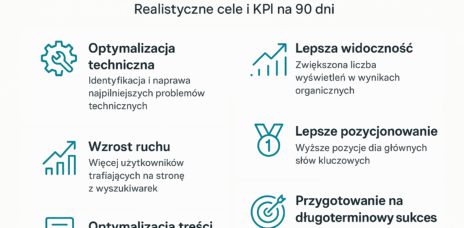
What results to expect from Interim SEO? Realistic goals and KPIs for 90 days
October 30, 2025Working with an SEO expert in an interim model is a strategic decision that responds to the dynamic needs of the business.
Read More
Subscription model in e-commerce: How to avoid the 5 most common mistakes that kill profitability?
October 21, 2025Bad pricing strategy - how not to underestimate the value and scare away the customer?
Read More
Interim Marketing: what is it and why is it not the same as freelancing? A complete guide for managers.
October 17, 2025Interim marketing is a strategic business solution of temporarily engaging an experienced marketing manager to achieve specific goals within your organization. It is not an ad hoc assistance, but a fully integrated, temporary leadership at the management level to bring about change, manage a crisis or fill a competency gap. It's a response to dynamic market needs that gives you access [...]
Read More
7 Red Flags That Expose a Weak SEO Agency. Check before you sign the contract!
October 17, 2025Choosing an SEO partner is one of the most important marketing decisions you will make. It's an investment that can multiply your revenue or, if you make the wrong choice, become an expensive burden with no real results. A good seo agency becomes an extension of your team, understands your goals and works systematically to increase your visibility.
Read More
AI in E-commerce: 7 Uses That Will Increase Conversion Without an IT Budget
October 17, 2025Artificial intelligence has ceased to be a futuristic buzzword and has become an accessible tool that can make a real difference to your online store's performance. As an e-commerce manager, you don't need to understand complex algorithms to reap the benefits of AI. You just need to understand the problems it solves and the opportunities it opens up for your business, even if you don't have a dedicated IT team.
Read More