

How did we build more net sales
and basket value with the help of SEMO?
Case study of a Polish brand synonymous with modern elegance
and perfect tailoring.
15,02%
Net sales growth in the first year of cooperation
Discover how the Lou.co.uk brand increased net sales and shopping cart value through SEO efforts and Google Ads campaigns.
Lou.pl
Fashion and apparel
SEMO
2022-2024
The Lou brand was born out of the need for unique clothes, today it is already a recognizable player on the Polish market. However, it does not forget what is most important in the production and sale of clothes, which are unique and made with attention to the smallest detail. The brand also makes sure that the materials from which the clothes are made are of the highest quality, and the production process from start to finish is carried out by Polish sewing factories.
The goals we set when we started working with Lou's brand focused primarily on sealing marketing costs, profitable sales growth, and most importantly building consistent tactics for working with the traffic acquisition ecosystem.
collaboration metrics:
+ 15,02 %
2023 vs. 2022+3,83%
2024 vs. 2023+15,02%
2023 vs. 2022+14,03%
2024 vs. 2023+13,982
2022 vs. 2024Analysis and definition
of existing problems
We started working with Semguru in June 2023, and it became clear very quickly that the number of areas we needed to support was quite large. After a thorough audit, we diagnosed the developmental areas, which included:

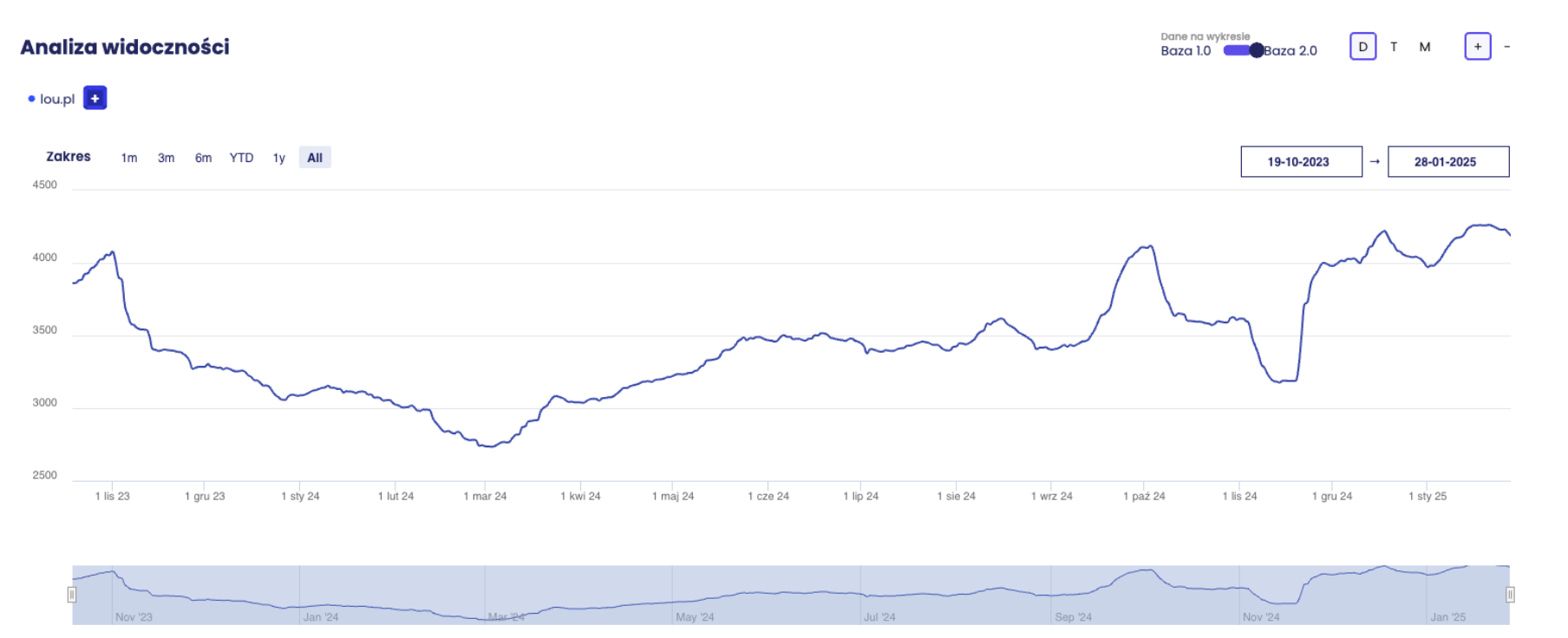
SEO → The channel was on a downward trend and we had to find an idea on how to reverse the trend

Google Ads → channel despite rising costs did not lead to satisfactory business results

Effectiveness and profitability of operations on third-party marketplace platforms

Increase the profitability of traffic acquisition channels, which are responsible for the bulk of the company's revenue

Support to Lou's Board of Directors in building a strategy to enter foreign markets

Supporting the content threads on returns, service development and customer expectation analysis
Mapping and problem solving
1.2k
+1.1k
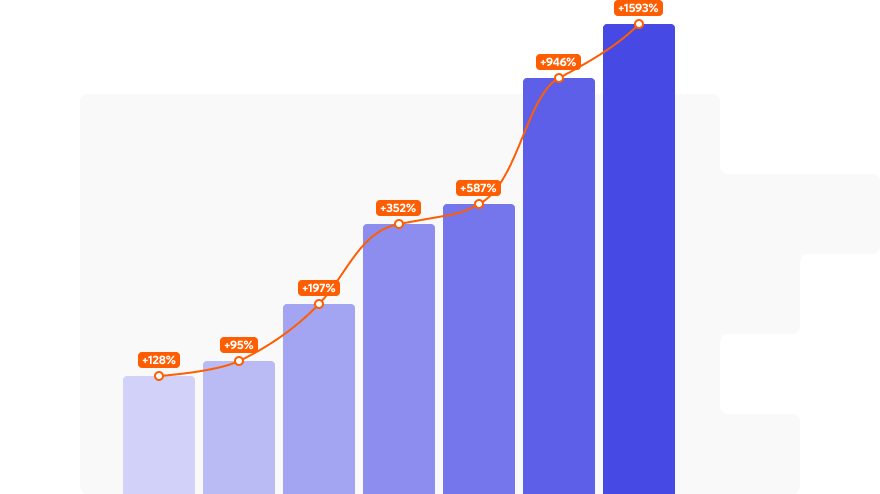
1593%
3.3k
+3.2k
3162%
SEO audit
request
Comment
Implementation of FLC rule on product subpages
By using FLC, we have increased the indexability of key content elements on product pages
Correct implementation of rel="nofollow" attributes on links leading to low-value subpages (e.g., terms and conditions, cookie policy)
We reduced wasted indexing budget by eliminating robots' reach to irrelevant addresses
Improvements in H1/H2 header structure on product subpages
We cleaned up the structure of headings, which improved readability for robots and users
Implement hreflang tags and exclude irrelevant subpages (e.g. add to cart, wishlist) from indexation
We improved language version support and cleared the index of technical subpages with no SEO value
AIDA model keyword analysis and intensification of link building activities
We focused on words that match user intent and strengthened the link profile
The implementation process consisted of the following steps:
Elimination of duplicate titles
Re-optimization of descriptive content on product category subpages
Exclusion of low-value subpages from the indexation process
Expansion of the blog section - systematic publication of articles
Mapping and problem solving
+183,65 %
26.02.2020 to 3.11.2023-25,80 %
26.02.2020 to 3.11.2023Google Ads campaigns
After analyzing the Google Ads channel, we came to the following conclusions, which helped us improve the results from this channel:
During the audit, we found many errors at the level of account configuration,
as well as campaigns, the main ones included:
- Lack of exclusion of certain phrases, e.g., phrases.
- No exclusion of mobile apps from the account.
- Campaigns targeting people "interested in the location."
- No brand list exclusions in PMAX campaigns.
The account, for the most part, focused on generating branded traffic,
by which the acquisition of new and uninformed users was severely limited.
The main driver of the account was one PMAX campaign centered around sales of the main
product category of dresses.
The entire account optimization was centered around ROAS calculated on revenue,
and not on margin which meant that results that looked "good" did not necessarily translate into profit for the company.
Not all campaigns focused on "conversion value" by which the profitability was below the campaign's potential.
After determining the most important issues, we immediately got to work. Due to the situation after the audit, we focused on straightening out the most important campaign and account settings. After implementing the most significant changes, we noticed that expenses began to decrease significantly, and after the first month of cooperation they dropped by 25% with ROAS increasing by 183.65% during the same period.
The next step was to create a new structure, which we laboriously called "30 vs 70." 30% of the budget is directed to cater to high brand traffic, push the competition out of branded phrases and cover as many results as possible in SERPAs that include Lou's phrase. We couldn't give up the branded phrases because the competition was displaying quite strongly on these phrases.
We redirected 70% of the budget to the remaining campaigns, which have precisely excluded branded phrases, and are aimed at acquiring a new user who is not yet familiar with our brand, but shows purchase intent. (Standard AIDA model).
The new concept resulted in a significant increase in the following KPIs:
Cart value → acquired through Google Ads.
Significant increase in ROAS. (Calculated on margin, not revenue).
In addition to good results in the short term, we have built a solid foundation for the development of the Google Ads channel, which has produced the following results in the long term:
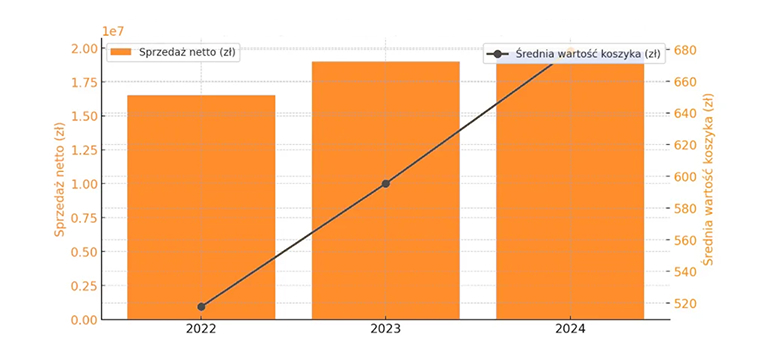
Results in Q3 2023 and Q4 2024 based on key metrics, i.e., revenue and average basket value, are as follows: (we treat 2022 as the baseline).
A few conclusions we drew from this collaboration that are often overlooked when analyzing the Google Ads channel:
- Analyzing the multi-channel path in the Ads dashboard as well as in Google Analytics 4 allows you to better understand the customer path.
- Cyclical optimization of the account (at least 2x a week) allows you to quickly catch errors and correct campaigns on the fly.
- Frequent testing of creatives / billing model / budget amounts / CPC amounts is an absolute "must have".
Summary
These results would not have happened if it were not for the "kind eye" of the Board of Directors, which gave us a big credit of confidence and listened to requests and ideas. From the very beginning, the Board of Directors and the team supported us in even the smallest change. This approach has given us a huge advantage in building the foundation for further development.